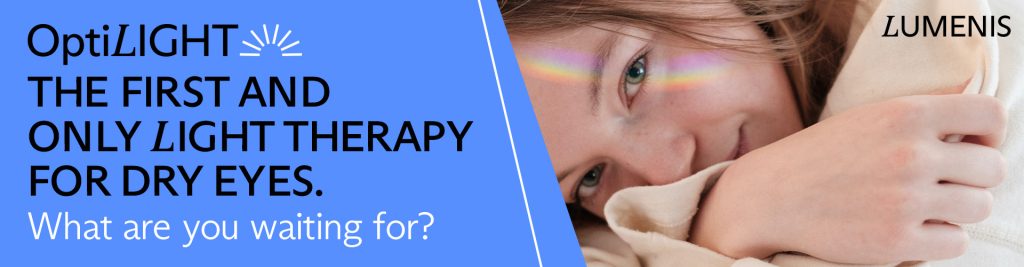
OptiLight IPL Treatment for Dry Eye in Saratoga Springs, NY
If chronic dry eye symptoms have not responded to drops or at-home remedies, OptiLight by Lumenis may be the breakthrough you have been looking for. As the first and only FDA-approved intense pulsed light (IPL) treatment specifically for dry eye disease management, OptiLight offers proven, lasting relief by targeting the root cause of evaporative dry eye. At Saratoga Vision in Saratoga Springs, NY, we are proud to offer this advanced therapy. Call (518) 587-5900 to schedule your consultation.
Book Online
What Is OptiLight by Lumenis?
OptiLight by Lumenis is a safe, gentle, and clinically validated IPL (intense pulsed light) treatment designed to manage dry eye disease caused by meibomian gland dysfunction (MGD). It is the only IPL device with FDA clearance for dry eye management, setting it apart from other light-based aesthetic devices that are sometimes used off-label for this purpose.
OptiLight works by delivering precise, controlled pulses of light to the skin below the lower eyelids. This targeted light energy reduces the abnormal blood vessel growth (telangiectasia) that feeds chronic eyelid inflammation, decreases the population of demodex mites and bacteria that contribute to MGD, stimulates meibomian gland activity, and improves the quality and stability of the tear film — all without touching the eye itself.
How OptiLight Relieves Dry Eye Symptoms
The therapeutic benefits of OptiLight for dry eye work through several mechanisms:
- Reduces inflammation: IPL light energy targets the abnormal blood vessels around the eyelid margin that release inflammatory mediators, interrupting the inflammation cycle at its source
- Decreases demodex and bacteria: OptiLight reduces the demodex mite population and bacterial load on the eyelids, both of which are strongly associated with MGD and blepharitis
- Improves meibomian gland function: By reducing eyelid inflammation and stimulating gland activity, OptiLight helps restore the flow of healthy meibum (oil) into the tear film
- Increases tear break-up time (TBUT): A more stable, well-lubricated tear film reduces evaporation and the frequency and severity of dry eye symptoms
What to Expect During OptiLight Treatment
Before Your Appointment
To prepare for OptiLight treatment, you should avoid skin brightening agents or serums for one week prior, avoid tanning beds for one month before treatment, and refrain from certain medications such as oral isotretinoin, tetracycline, or doxycycline for at least three months beforehand. Your optometrist at Saratoga Vision will review your full medical history and medications to ensure you are a suitable candidate.
During the Procedure
The treatment itself is fast and comfortable, taking only 10 to 15 minutes. Your doctor will apply a cooling gel to the treatment area below the eyes and place protective shields over your eyes. As the light pulses are delivered to the skin, you may notice a warm sensation or a gentle tapping feeling — the procedure is generally well-tolerated and not painful. No anesthesia is required.
After Your Treatment
Some patients experience very mild, temporary redness or dryness in the treatment area immediately following the procedure, which typically resolves quickly. You may continue your regular activities the same day. Because the skin in the treatment area may be temporarily more sun-sensitive, we recommend using sunscreen and avoiding prolonged sun exposure for the first week after each session.
How Many OptiLight Sessions Are Needed?
A full OptiLight treatment course typically consists of four sessions, spaced approximately two to four weeks apart. Most patients begin noticing improvement in their symptoms after the second or third session, with continued improvement over the weeks following the final treatment. Maintenance sessions may be recommended annually or as needed to sustain the results. OptiLight works best as part of a comprehensive dry eye management plan that may also include Systane® iLux2®, punctal plugs, or prescription eye drops.

Who Is a Good Candidate for OptiLight?
OptiLight is most beneficial for patients with evaporative dry eye caused by meibomian gland dysfunction. It is generally not recommended for patients who:
- Are taking certain medications including Accutane (isotretinoin)
- Have active acne or certain skin conditions in the treatment area
- Are prone to keloid scarring or have severe facial scarring
- Have been significantly sunburned recently in the treatment area
- Have a Fitzpatrick skin type V or VI (very dark skin tones), as IPL may not be appropriate
During your consultation at Saratoga Vision, we will conduct a thorough evaluation to determine whether OptiLight is the right treatment for you, or whether other options from our Dry Eye Center would better serve your needs. Call (518) 587-5900 to get started.
Frequently Asked Questions About OptiLight IPL for Dry Eye
What makes OptiLight different from other dry eye treatments?
OptiLight by Lumenis is the first and only IPL device with FDA clearance specifically for dry eye disease management. Unlike eye drops or warm compresses, which manage symptoms, OptiLight addresses the underlying root causes of evaporative dry eye — inflammation, demodex overgrowth, and meibomian gland dysfunction — using precise, clinically validated light energy. It is an in-office treatment that can produce lasting results not achievable through at-home therapies alone. Learn more about all of our dry eye treatment options.
Is OptiLight painful?
No. Most patients describe OptiLight as comfortable, experiencing only a mild warming or gentle tapping sensation during the light pulses. A cooling gel is applied to the skin before treatment to further enhance comfort. There is no downtime, no anesthesia required, and the entire procedure takes only 10 to 15 minutes per session. Many patients return to their normal daily activities immediately after treatment.
How soon will I see results from OptiLight?
Most patients begin noticing improvement in their dry eye symptoms after the second or third OptiLight session. The full benefit is typically experienced in the weeks following the completion of the four-session treatment course. Improvements include longer-lasting tear film stability, reduced redness and irritation, more comfortable contact lens wear, and a decreased need for artificial tears. Your progress will be monitored by our team at Saratoga Vision throughout your treatment.
How many OptiLight sessions do I need?
The standard OptiLight treatment protocol consists of four sessions spaced two to four weeks apart. After completing the initial course, many patients opt for annual maintenance sessions to sustain their results. The frequency of maintenance treatments depends on the severity of your underlying MGD and how well your meibomian glands have responded to treatment. Our team at Saratoga Vision will advise you on the appropriate maintenance schedule based on your individual response.
Can OptiLight be combined with other dry eye treatments?
Yes, and in many cases combining treatments provides the best outcomes. OptiLight is frequently used alongside Systane® iLux2® meibomian gland expression, prescription anti-inflammatory eye drops, and daily warm compress therapy. Our team at Saratoga Vision will design a personalized, multi-modal dry eye treatment plan that maximizes your relief and addresses all contributing factors to your condition.
Does insurance cover OptiLight treatment?
At this time, OptiLight is typically not covered by standard vision or medical insurance plans, as it is considered an elective procedure. However, it may qualify for payment through health savings accounts (HSA) or flexible spending accounts (FSA). Our team at Saratoga Vision will discuss all costs and payment options during your consultation so you can make an informed decision. Call (518) 587-5900 with any questions about pricing or payment.
Is OptiLight safe for all skin tones?
OptiLight works best for patients with lighter skin tones (Fitzpatrick skin types I through IV) and is generally not recommended for patients with very dark skin (Fitzpatrick V or VI) due to the risk of pigmentation changes with IPL light energy. During your consultation at Saratoga Vision, we will assess your skin type and overall candidacy to ensure OptiLight is appropriate and safe for you. If you are not an ideal candidate for IPL, we will recommend alternative dry eye treatments that can provide excellent results.